Short answer
Most of the damage we repair could have been avoided. Once a year, a nitrogen cryosauna needs its nitrogen nozzles cleaned and its O2 sensor checked (replaced about every two years), and the ducts behind the back panel checked for rust. Electric chambers need their fans checked and their glycol or refrigerant topped off when low, and owners should watch the corner seals and drain the condensation reservoir. Every night, both types need to be dried completely.
Nitrogen cryosaunas
Clean the nitrogen nozzles once a year
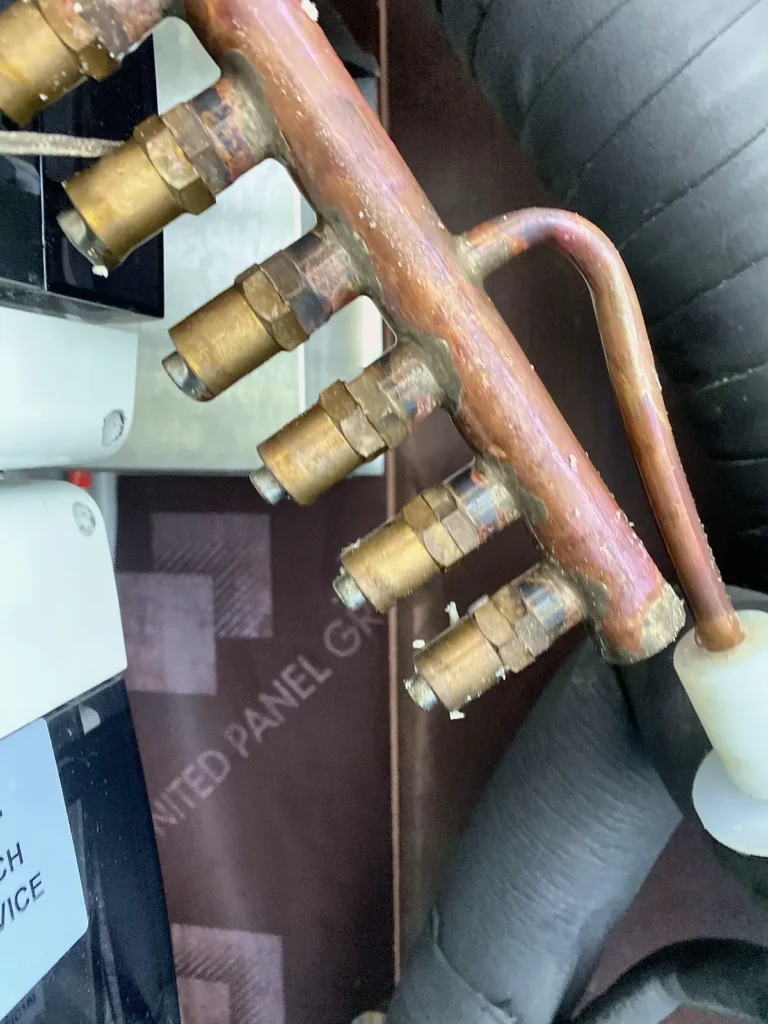
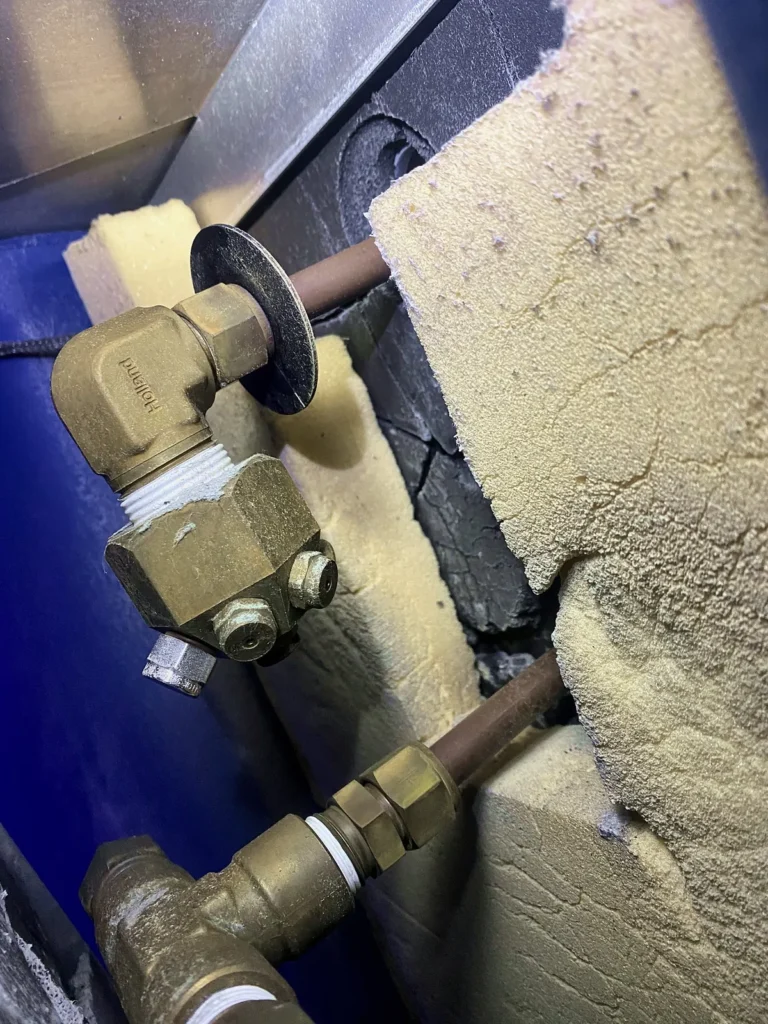
The nitrogen nozzles on the manifold slowly clog. There is no warning sign: the machine simply performs worse over time. That’s why we clean them once a year rather than waiting for a symptom.
How we clean them: remove the nozzles, take them apart completely, soak them in a vinegar and water solution, clean them with a toothbrush and small brushes, and rinse with water. It takes about an hour.
This is a job for a technician, not a do-it-yourself task. The nozzles sit on the nitrogen line. If they aren’t reassembled correctly, nitrogen vapor can escape anywhere in the machine and the room. Have it done during a maintenance visit.
Replace the O2 sensor about every two years
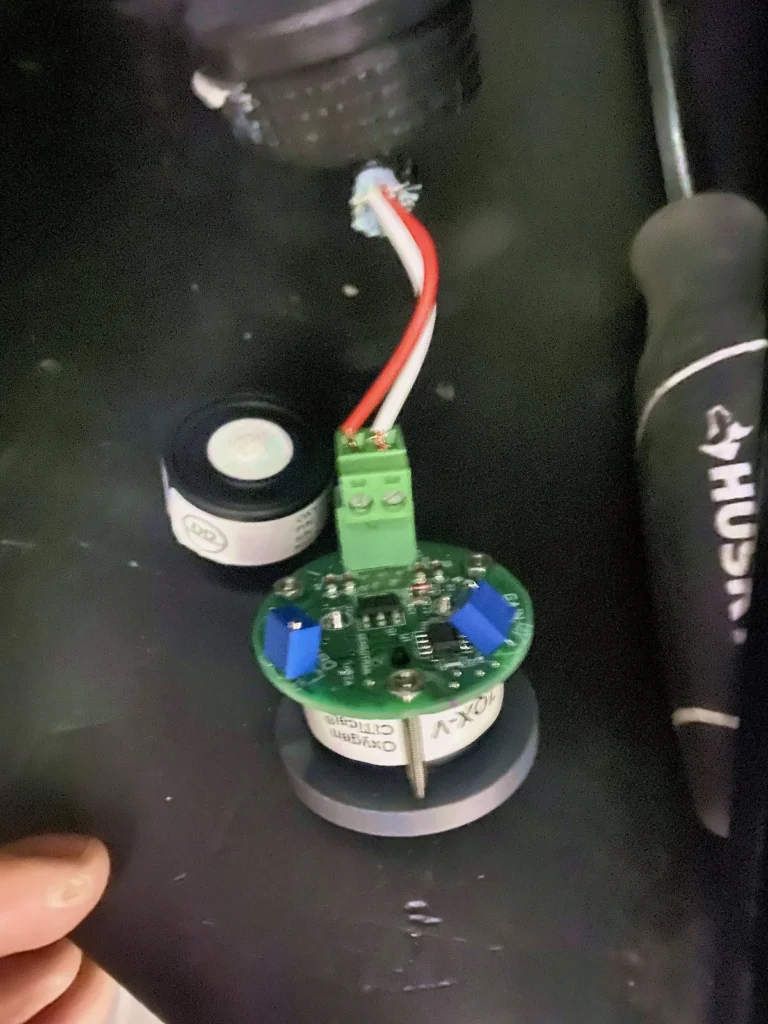
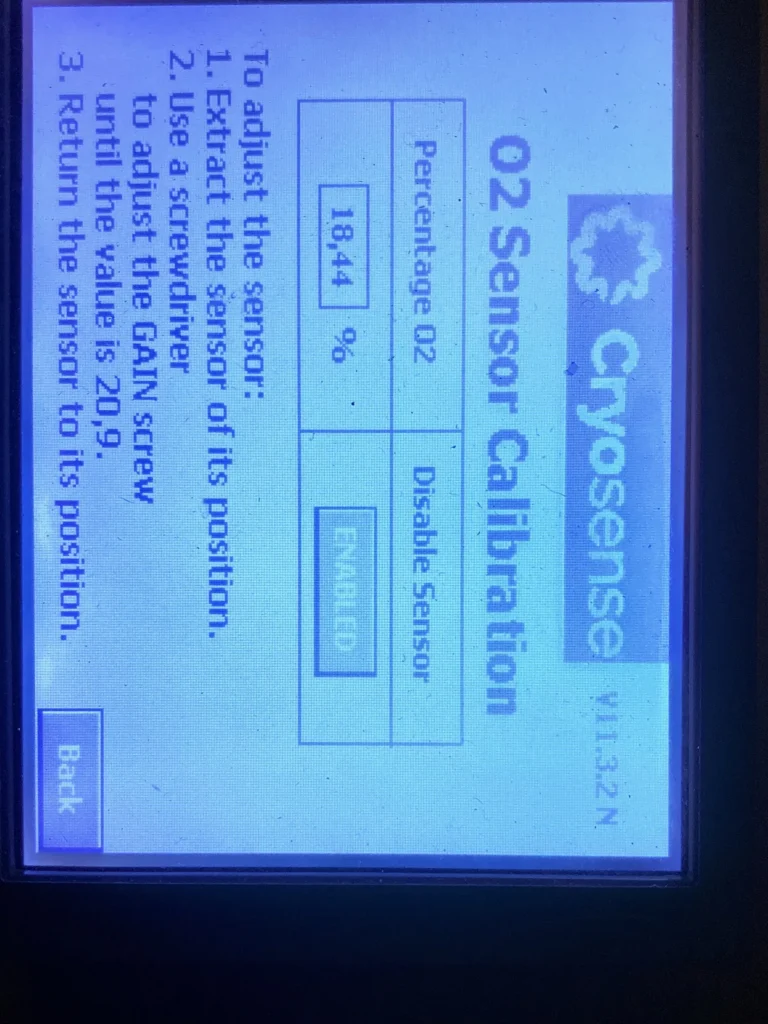
The machine’s oxygen sensor protects the person in the cabin. These sensors usually last about two years. After replacement the new sensor is calibrated.
Have a room oxygen monitor, in the machine room and the tank room
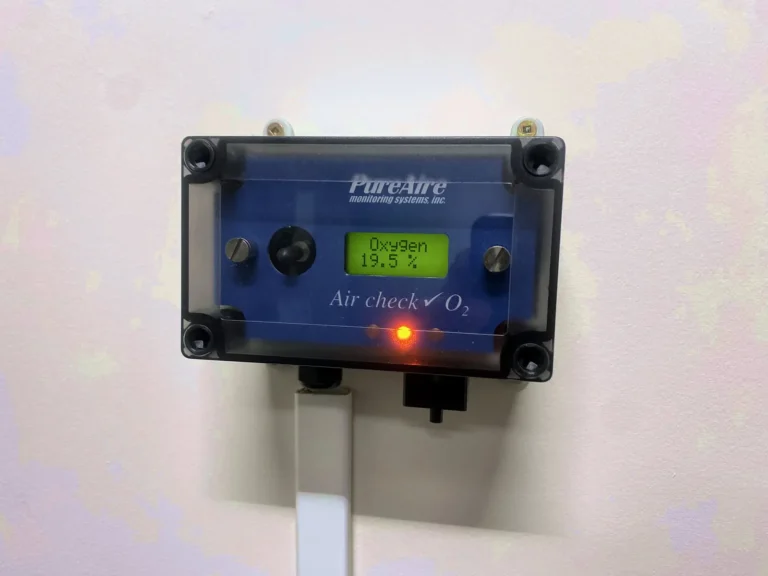
Separate from the machine’s own sensor, a wall-mounted oxygen monitor warns everyone in the room when nitrogen pushes the oxygen level down. Put one in the room with the machine and one where the nitrogen tanks are stored.
Nitrogen displaces oxygen quickly. The American Industrial Hygiene Association calculates that about 10 liters of liquid nitrogen, the contents of a small dewar, can lower the oxygen in a 20 × 20 ft room with a 9 ft ceiling below 19.5%, the level OSHA calls oxygen-deficient.
Fire codes can require this monitoring where liquid nitrogen is used or stored, and requirements differ by city. New York City’s fire code, for example, requires oxygen sensors with an alarm below 19.5% where 60 gallons or more of cryogenic liquid is dispensed. Ask your local fire department what applies to you. In our experience it is rarely checked, which is no reason to skip it.
We recommend monitors with a long-life zirconium sensor: PureAire states its sensors last 10 years or more without scheduled calibration, compared with about two years for many standard sensors. They cost more up front, which is why many owners skip them.
Check the ducts behind the back panel (JUKA)
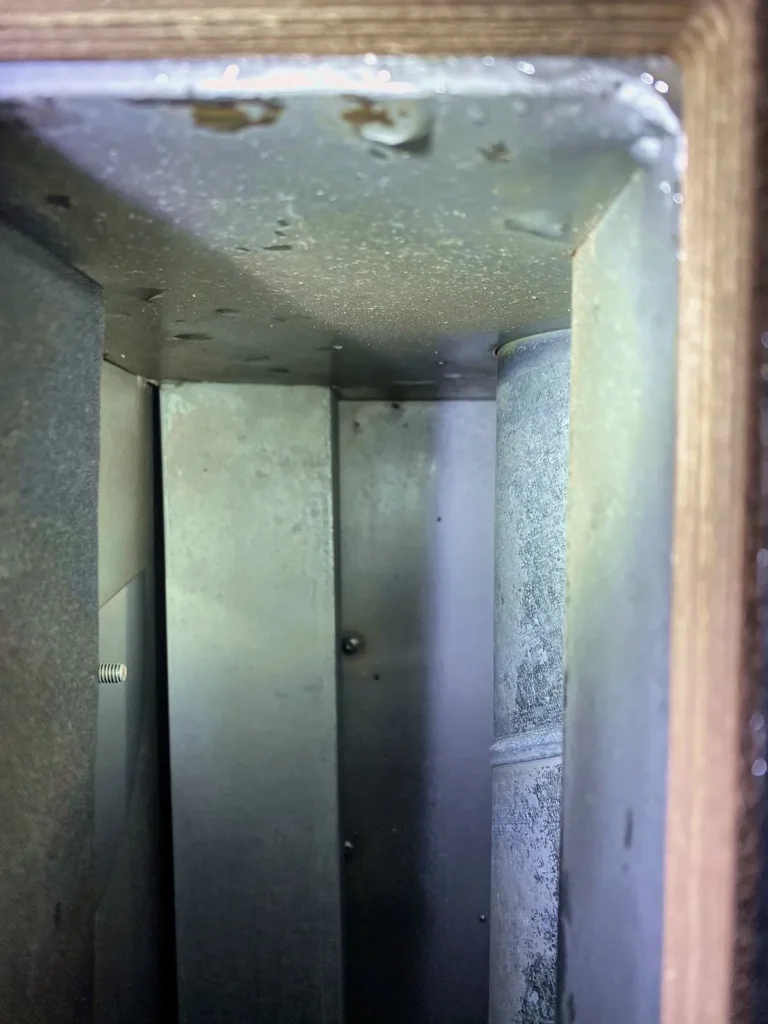
On a JUKA you can see the ducts that lead into the heat exchanger by pushing up the back panel inside the cabin. No tools needed: owners can do this check themselves.
What to look for: rust. If the machine isn’t dried every evening, melted frost sits on these ducts and they rust. Air then escapes in the wrong places and the machine stops cooling properly. Replacing the ducts means taking the whole machine apart, so in our experience it’s usually not worth the cost. An HVAC tape patch works, but it isn’t a solid repair. Prevention is the only good answer: dry the machine every night.
Vent the supply hose after closing the tank
Liquid nitrogen trapped in the hose after you close the tank builds pressure overnight and can break the solenoid valve. Run a 60-second dry session after closing the tank, or have a relief valve installed: see why nitrogen solenoid valves fail.
Electric whole-body chambers
Check the fans
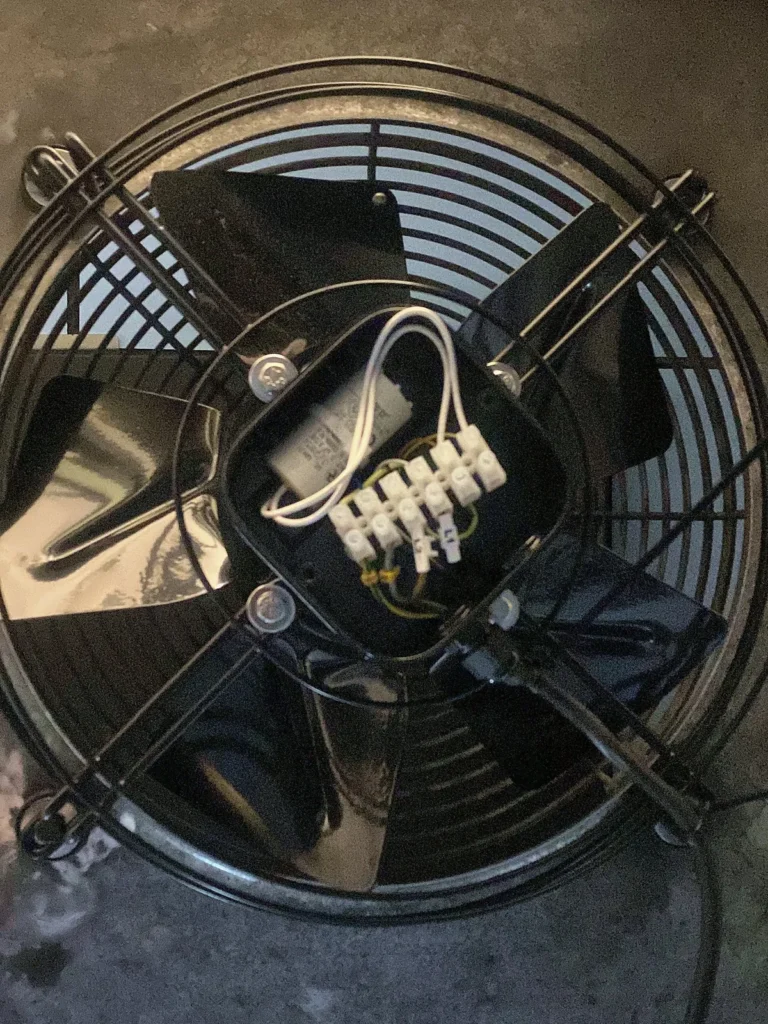
Fan failure is one of the most common repairs on electric chambers, and in humid rooms fans often fail about once a year. Keep the treatment room below 40% humidity.
Owners can check the fans visually:
- Iced up? Switch the machine off; a hair dryer is a quick way to defrost the fan.
- Not moving when you switch the machine on, while the unit is still warm? Then the fan isn’t simply frozen. A technician needs to measure the motor’s resistance and, if it has failed, replace it.
Owner checks between visits
- Check the seals for leaks. Most electric chambers are sealed with silicone where the panels meet in the corners. If the silicone peels away, water can get into places it shouldn’t. Look at the corners regularly and call us if a seal is coming loose.
- Drain the condensation reservoir. Some machines, such as the CTN eCabin and many smaller local machines, collect condensation in a water reservoir. Drain it frequently: if it’s full, the water can freeze or overflow.
Top off glycol or refrigerant when low
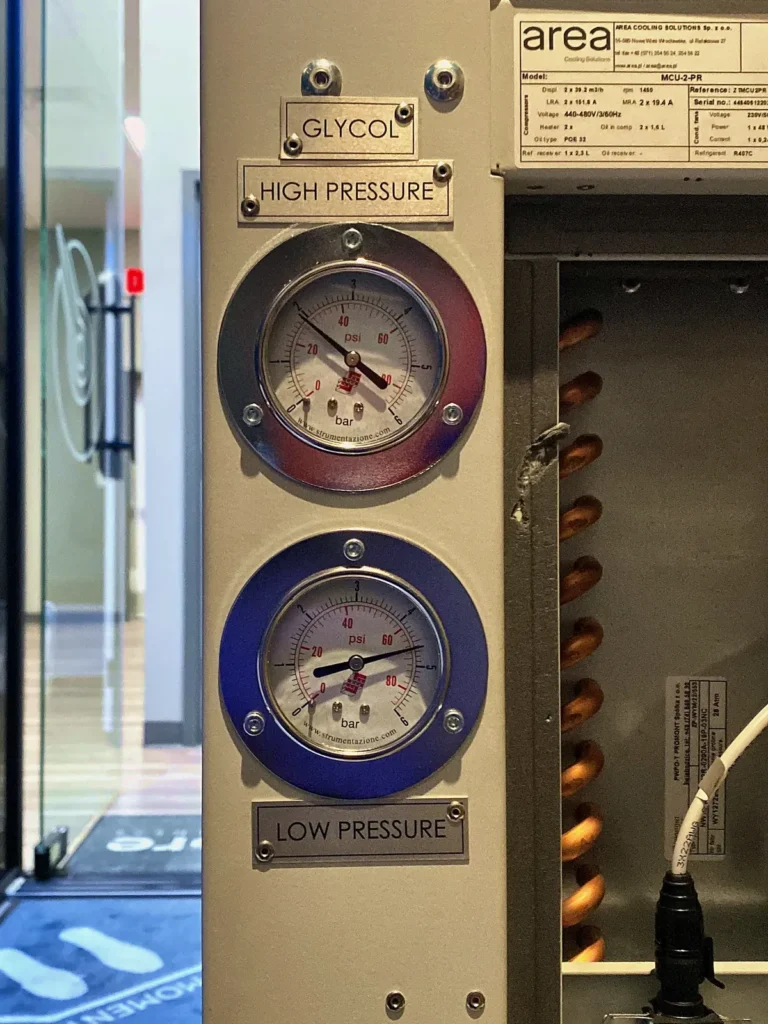
Large electric chambers often need their glycol or refrigerant topped off. Refrigerant work is done by EPA 608 certified technicians.
Every night, both types: dry the machine completely
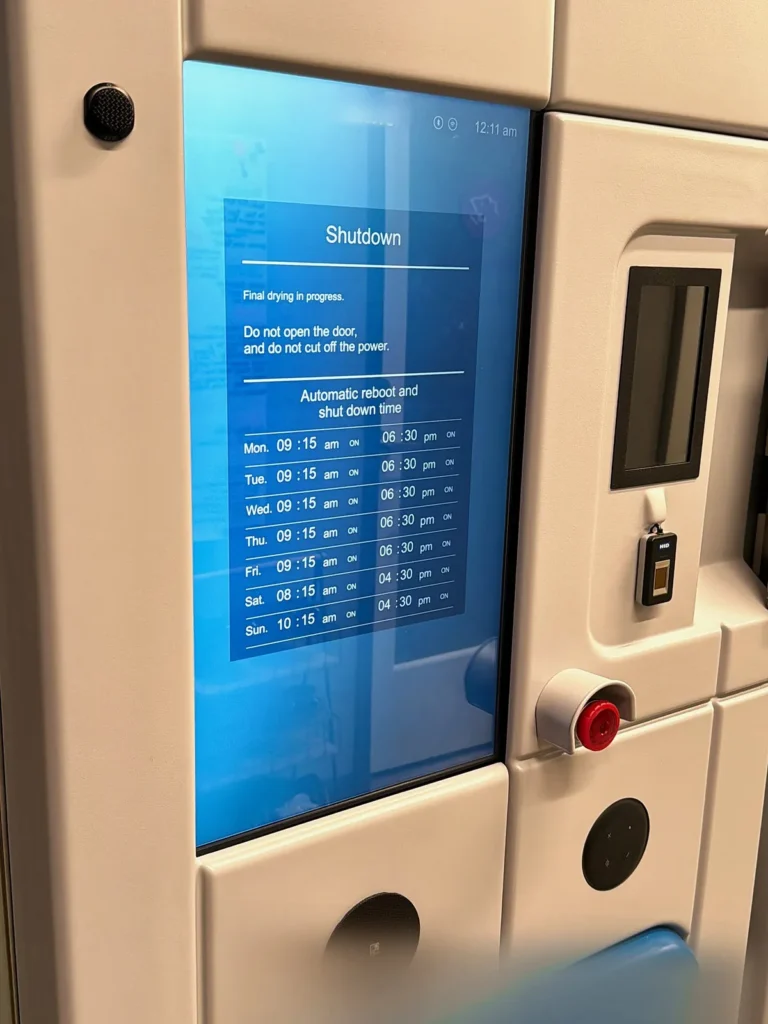
Run the drying cycle fully at the end of every day. Moisture left in the machine leads to the kind of damage above: rusted ducts in nitrogen machines, failing fans in electric chambers. More on what fails and why: what breaks in cryotherapy machines.
Yearly checklist
| Task | Machine type | Who |
|---|---|---|
| Clean nitrogen nozzles | Nitrogen | Technician |
| Check O2 sensor; replace about every two years | Nitrogen | Technician |
| Check room oxygen monitors work | Nitrogen | Owner |
| Check ducts behind the back panel for rust | Nitrogen (JUKA) | Owner |
| Check fans visually; defrost iced fans with a hair dryer (machine off) | Electric | Owner |
| Fan not moving on a warm unit: measure motor resistance | Electric | Technician |
| Replace fans | Electric | Technician |
| Check panel-corner silicone seals for leaks | Electric | Owner |
| Drain the condensation reservoir (eCabin and similar) | Electric | Owner, frequently |
| Top off glycol or refrigerant | Electric | EPA 608 certified technician |
| Dry the machine fully | Both, every night | Owner |
Book a yearly maintenance visit
One visit can cover all the machines in your recovery room. See how our maintenance plans work.
Open a service ticket or call (213) 559-0665.
Sources (checked November 28, 2026): AIHA, Asphyxiation hazards of cryogenic gases · Columbia University EHS, oxygen sensor requirements (citing FDNY Fire Code §3205) · PureAire, long-life zirconium O2 sensor.