Short answer
When you close the nitrogen tank at night, liquid nitrogen stays trapped in the hose between the tank valve and the machine’s solenoid valve. Overnight it warms, turns to gas and builds pressure against the solenoid valve. That pressure can stop the valve from opening the next morning, so the machine doesn’t cool, and over time it deforms the valve and breaks it.
Two ways to prevent it:
- The habit (free): after you close the tank valve, run one dry session (a session with the tank valve closed) for at least 60 seconds so the trapped nitrogen can escape, then turn the machine off.
- The proper fix: a pressure relief valve in the supply line. We install them.
How the solenoid valve works
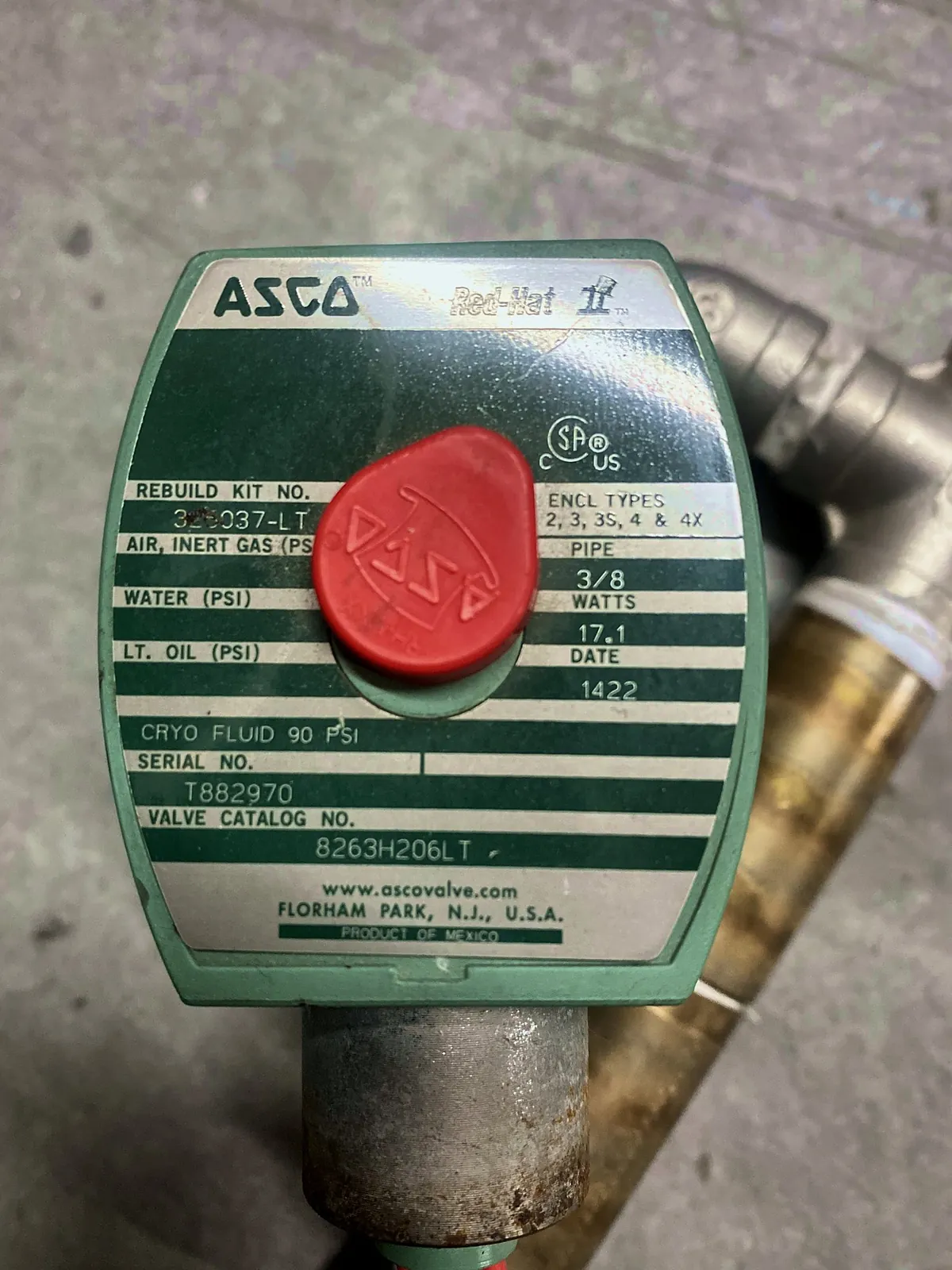
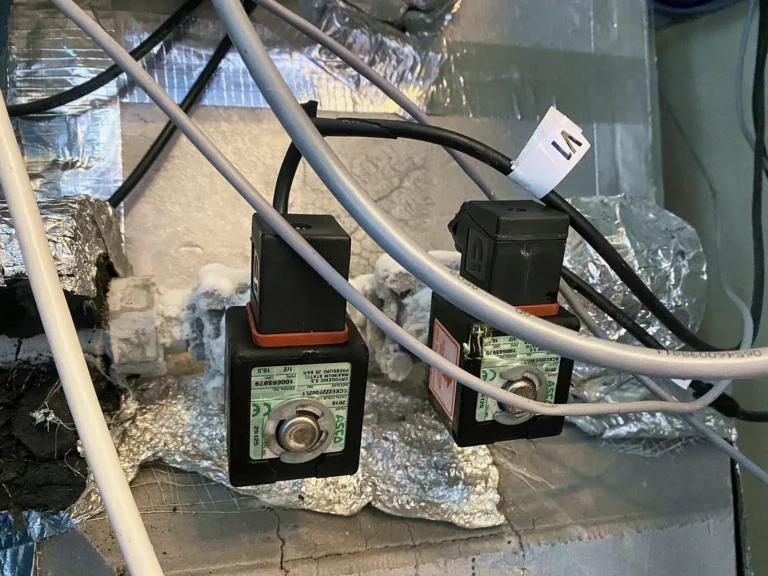
Nitrogen cryosaunas have a solenoid valve where the supply hose enters the machine. Inside it is a small pin. When a session starts, a magnet pulls the pin back and liquid nitrogen flows into the machine. When the session ends, the pin closes again.
The valve is built to open against normal tank pressure. It is not built to hold back a hose full of nitrogen that has turned to gas.
What happens overnight
Closing the tank valve at the end of the day is correct. But it leaves liquid nitrogen in the hose between two closed valves: the manual valve on the tank and the solenoid valve on the machine.
Liquid nitrogen expands about 700 times in volume when it turns to gas at room temperature (Airgas lists 1 to 696 at 70 °F). Trapped in a hose, that expansion becomes pressure. The manual tank valve can take it. The solenoid valve often can’t:
- Some mornings the machine doesn’t cool at all. The pressure against the pin is higher than the magnet can pull, so the valve stays shut.
- Over time the valve breaks. The pressure deforms the pin and the valve fails, and it has to be replaced.
Engineering guidance for cryogenic systems treats this as a known hazard: Argonne National Laboratory’s cryogenic safety rules name liquid nitrogen trapped in a section of transfer line by a closed valve as a failure case, and require pressure relief on piping that can contain cryogenic liquid. Trapped liquid can stress the hose and fittings too, not only the valve.
Why most machines have no protection
A pressure relief valve in the supply line lets trapped pressure escape safely. Installations with large microbulk tanks usually have one. Most cryosaunas, though, run on small 250-liter dewars connected with a hose, and those setups usually have no relief valve at all.
The 60-second shutdown habit
At the end of the day:
- Close the valve on the nitrogen tank.
- Run one dry session for at least 60 seconds. A dry session is a normal session with the tank valve closed, so no new nitrogen comes from the tank; only what is trapped in the hose flows out through the machine. Leave the cabin door open; nobody needs to be inside.
- Turn the machine off.
Safety: this session releases nitrogen into the machine and the room. Keep the cabin door open with nobody inside, make sure the room is ventilated as for normal sessions, and check that your oxygen monitor is working. If the oxygen alarm sounds, leave the room and re-enter only when the oxygen level reads 19.5% or above, ideally about 20.9%. Call 911 if anyone feels dizzy, short of breath or confused.
The proper fix: a relief valve in the line
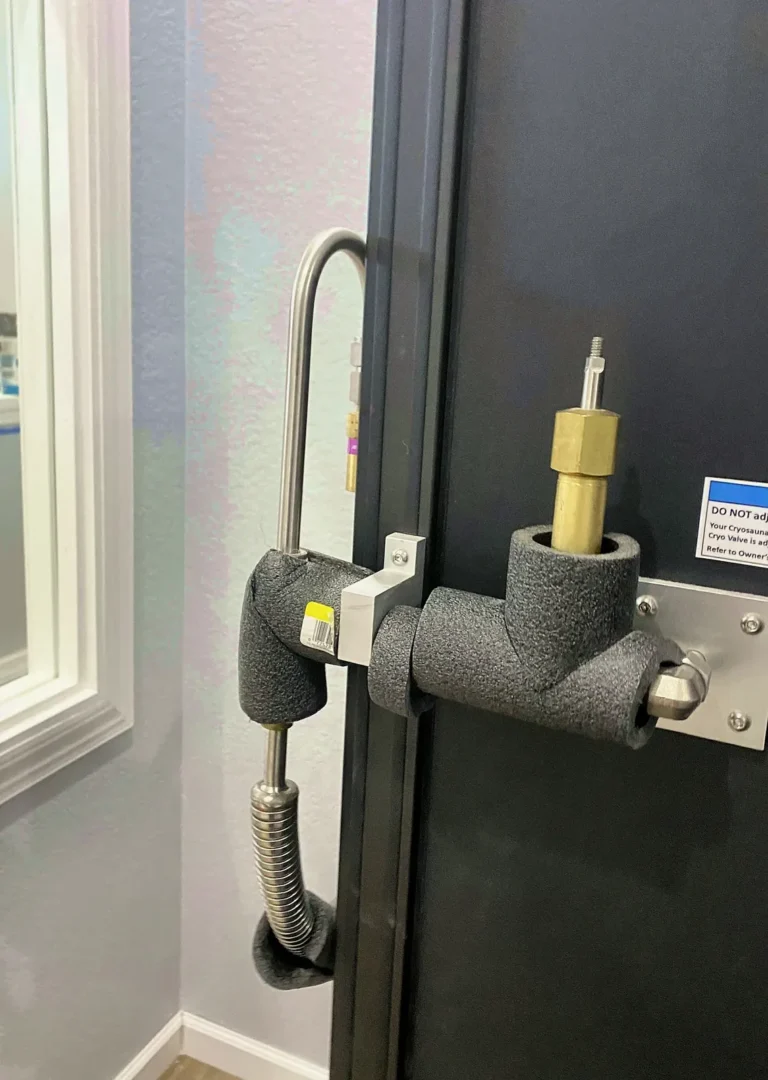
The habit works only if it’s done every night, by every closing shift. A relief valve works every time. The fitting we use is called a “candy cane”: a short curved section added to the supply line with an over-pressure relief valve, so trapped pressure vents safely instead of pushing against the solenoid valve.
We install relief valves on existing setups. It’s a simple job, about an hour, and it removes the cause of this failure.
Signs your machine may be affected
- The machine doesn’t cool at all when you start it.
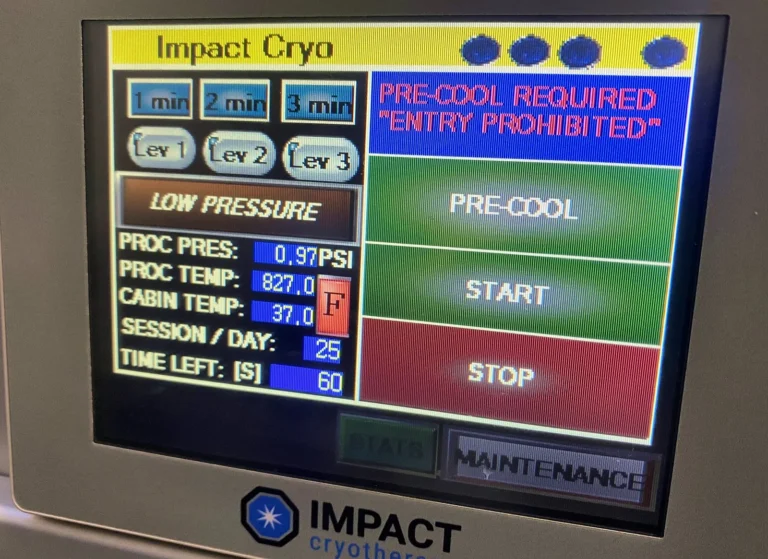
- A low pressure warning (on the Impact above, the cause was a failed solenoid valve).
- The solenoid valve has been replaced before.
- You close the tank every night and have no relief valve in the line.
Frequently asked questions
Should I stop closing the tank valve at night?
No. Closing the tank is correct. Add the 60-second dry session after it, or have a relief valve installed.
Does this apply to electric cryotherapy chambers?
No. Electric chambers don’t use liquid nitrogen. It applies to nitrogen cryosaunas fed from a tank or dewar.
Which machines are affected?
Any nitrogen cryosauna with a solenoid valve on the supply line. We’ve replaced failed solenoid valves on machines from several manufacturers, including Impact and Cryo Science.
My machine already won’t cool. What now?
Start a free remote diagnosis or call (213) 559-0665. A failed solenoid valve is only one of several causes; see Cryo chamber not getting cold.
Get it fixed for good
Ask us about a relief valve for your nitrogen line, or send us the symptoms for a free remote diagnosis.
Start a free remote diagnosis or call (213) 559-0665.
Sources (checked November 28, 2026): Airgas, cryogenic liquid containers (nitrogen expansion ratio 1 to 696 at 70 °F) · Argonne National Laboratory Physics Division, cryogenic safety: methods and relief valve requirements.